Like a well-worn fedora, knowledge molds itself to the seeker. Welcome to Lyman Forest Press—where ideas fit just right. Traditionally felt is a somewhat moldable fabric made from wool or rabbit fur used in hats like Fedoras. Felt has a long history of craftsmanship that can last decades. Add a feather for a Revolutionary spirit.
“Look at the birds of the air: they neither sow nor reap nor gather into barns, and yet your heavenly Father feeds them. …
And why are you anxious about clothing? Consider the lilies of the field, how they grow: they neither toil nor spin, yet I tell you, even Solomon in all his glory was not arrayed like one of these.”– Matthew 6:26, 28-29 (ESV) – God’s Care in Nature
The classic felt hat protects against sun, wind, cool temperatures, and may help absorb excessive EMF energy or positively charged particles which are an inflammatory health negative.
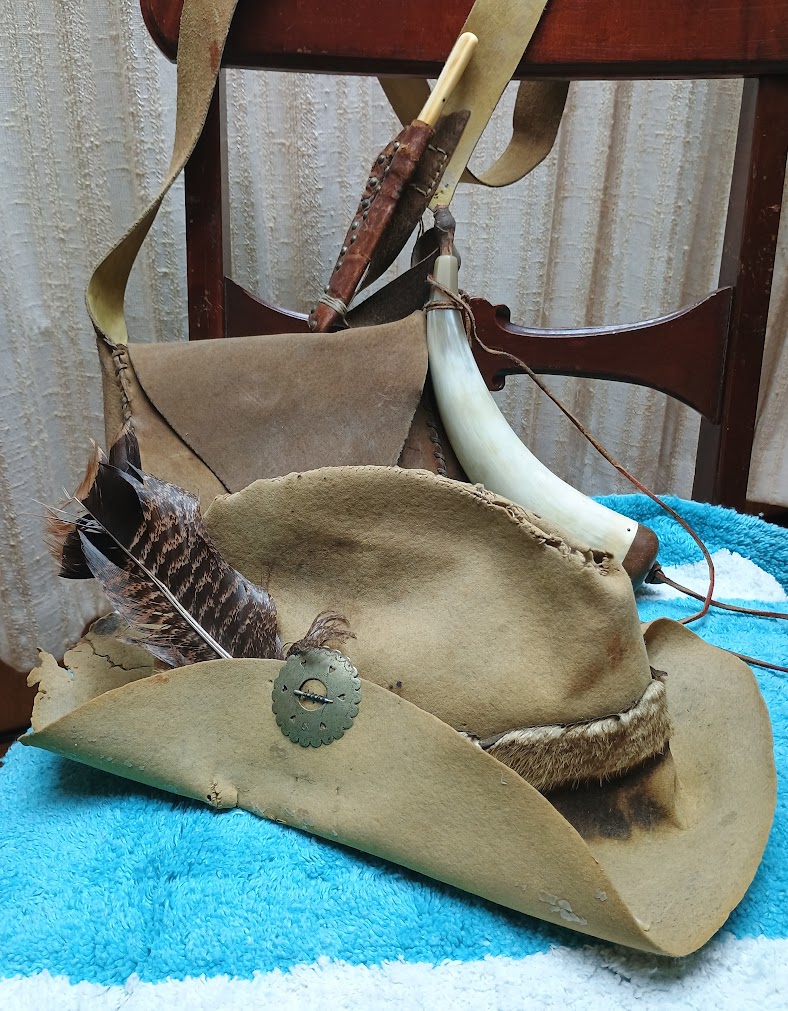

The Felt Hat: A 5,000-Year-Old Story of Status, Survival, and Style
From ancient nomads to noir detectives, the felt hat has been a silent witness to history—shaped by warfare, religion, and rebellion.
1. Origins in the Bronze Age
- Felt is humanity’s oldest textile, predating weaving. Nomadic tribes (Scythians, Mongols) discovered that wool + sweat + friction created a waterproof, insulating fabric—perfect for yurts and hats.
- Legend says Saint Clement, a 4th-century monk, invented felt by stuffing wool in his sandals—then preached with blistered feet but dry socks.
2. The Fedora’s Dark Turn
- The name “fedora” comes from an 1882 play where Princess Fédora wore a soft-brimmed hat, sparking a women’s trend. But when men adopted it in the 1920s, it became shorthand for gangsters and hardboiled detectives (thanks to Bogart in Casablanca).
- Al Capone’s fedora was armor: the wide brim hid his face from cameras, while the crown concealed a pistol.
3. The Hat That Toppled Empires
- In 18th-century Europe, beaver felt hats were so valuable they fueled the North American fur trade—and wars between France and Britain.
- By 1900, silk replaced beaver… until Indiana Jones resurrected the fedora as a symbol of adventure (even if his was actually a Stetson “Open Road”).
4. Why We Still Love It
- Felt hats mold to the wearer’s head, literally shaping themselves to their owner—like a lived-in soul.
- In a 2024 twist, “quiet luxury” revived the fedora—now a talisman of old-world craftsmanship in a disposable age.
Final Thought:
“A felt hat is more than felt—it’s a fossil of human ingenuity, from Genghis Khan to Philip Marlowe.”
-DeepSeek AI
Disclaimer: This information is being shared for educational purposes within the guidelines of Fair Use and is not intended to provide individual health care guidance.
 Site Title