Powder Horns: The Original Ammo Can”
Before plastic cartridges and tactical gear, there was the powder horn—a frontier survival tool, status symbol, and canvas for storytelling.
1. Born from Necessity
- French Coureurs des Bois (fur trappers) and Indigenous hunters used hollowed-out bull or buffalo horns to keep gunpowder dry. Unlike metal, horn wouldn’t spark if struck—a lifesaver when reloading a muzzleloader in the rain.
- Native American artisans often engraved them with tribal motifs, while French trappers carved maps, initials, or bawdy scenes.
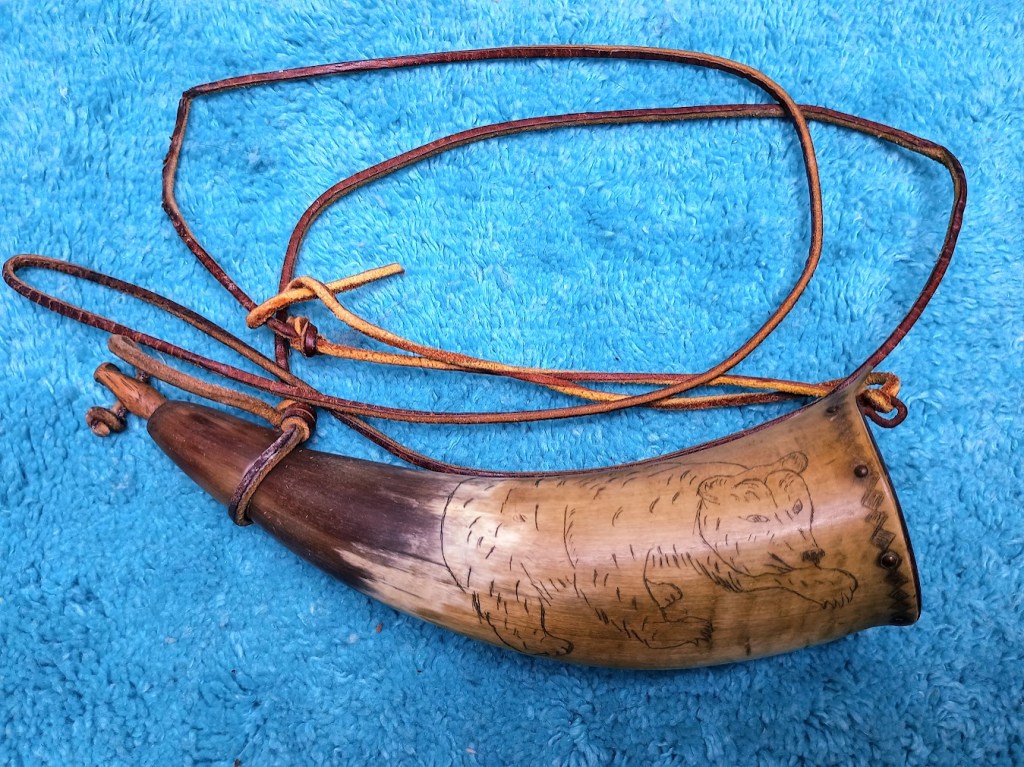
2. The First Personalized Gear
- Powder horns were the “tactical backpacks” of their day:
- Strapped to belts or worn across the chest.
- Plugged with carved wooden stoppers—some disguised as animal heads or tiny saints.
- A status symbol: The more intricate the carvings, the wealthier (or more notorious) the owner.
3. The Ultimate Souvenir
- After the American Revolution, veterans brought home horns etched with battle maps or “Liberty or Death” slogans—making them some of the earliest war memorabilia.
- Fun Fact: Daniel Boone’s lost powder horn resurfaced in 2020… with a self-portrait of him fighting a panther.
Why We Still Love Them
- They’re raw ingenuity: nature’s keratin repurposed for firepower.
- A relic of when ammo storage was folk art.
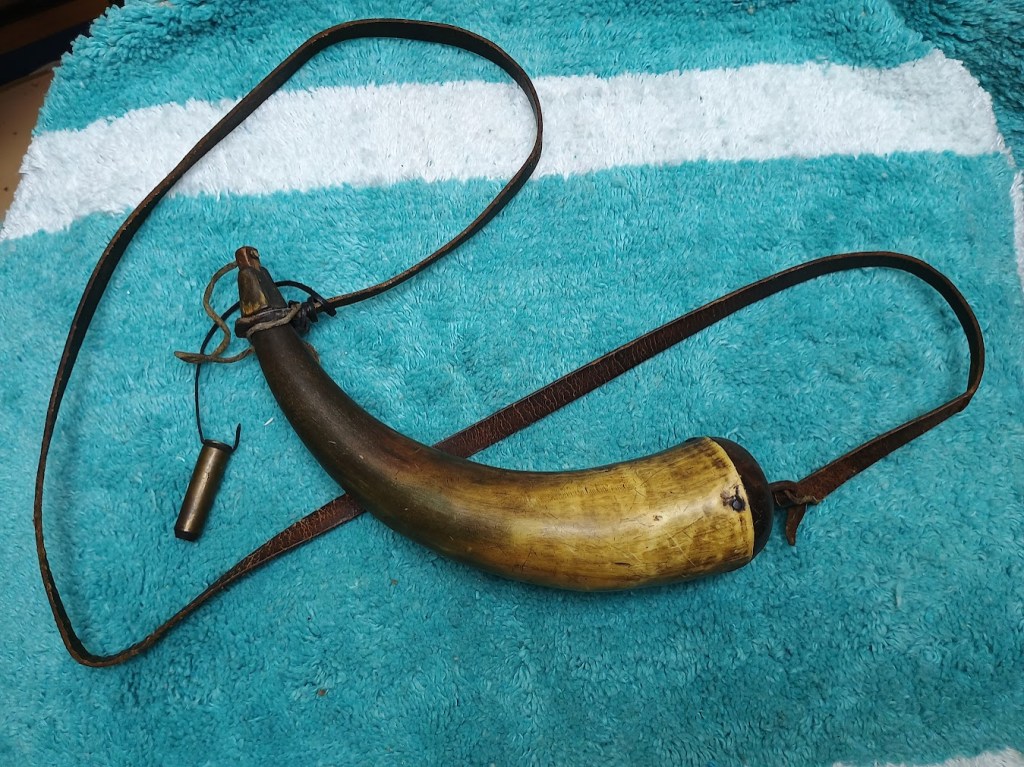
For an authentic, hand-carved antique powder horn (18th–early 19th century), prices can vary wildly based on age, provenance, artistry, and condition. Here’s a rough guide to gauge value:
1. Basic Unengraved Horns (Functional, Minimal Carving)
- $100–$400: Common among reenactors; often 20th-century reproductions.
- $500–$1,200: Verified 18th/19th-century plain horns (especially if tied to fur trade or militia).
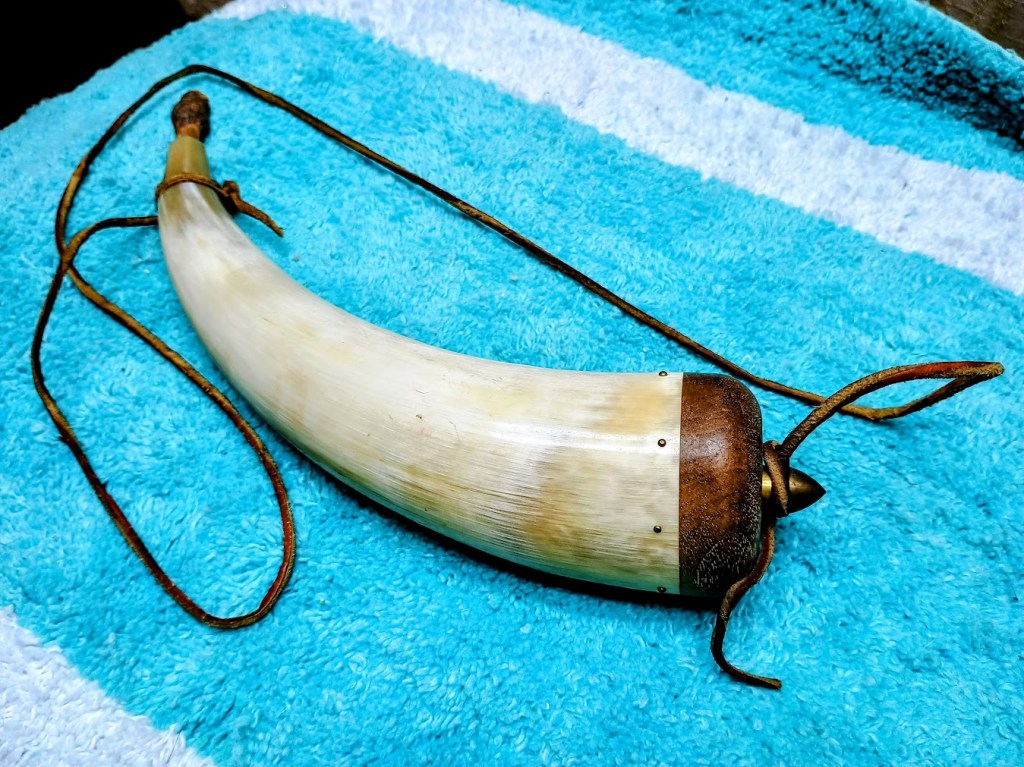
2. Engraved or Historically Significant Horns
- $1,500–$5,000+: Intricate carvings (maps, battles, initials) or linked to famous owners (e.g., Revolutionary War soldiers).
- Example: A French & Indian War-era horn with a detailed frontier map sold for $8,500 in 2023.
- Indigenous-carved horns (rare, with tribal motifs) can fetch $3,000+ at specialized auctions.
3. “Showpiece” Horns (Museum-Quality)
- $10,000–$50,000+: Masterpieces like Daniel Boone-style horns or those tied to major events (e.g., Lewis & Clark Expedition).
- The “Sullivan Horn” (Revolutionary War, engraved with battles) sold for $65,000.
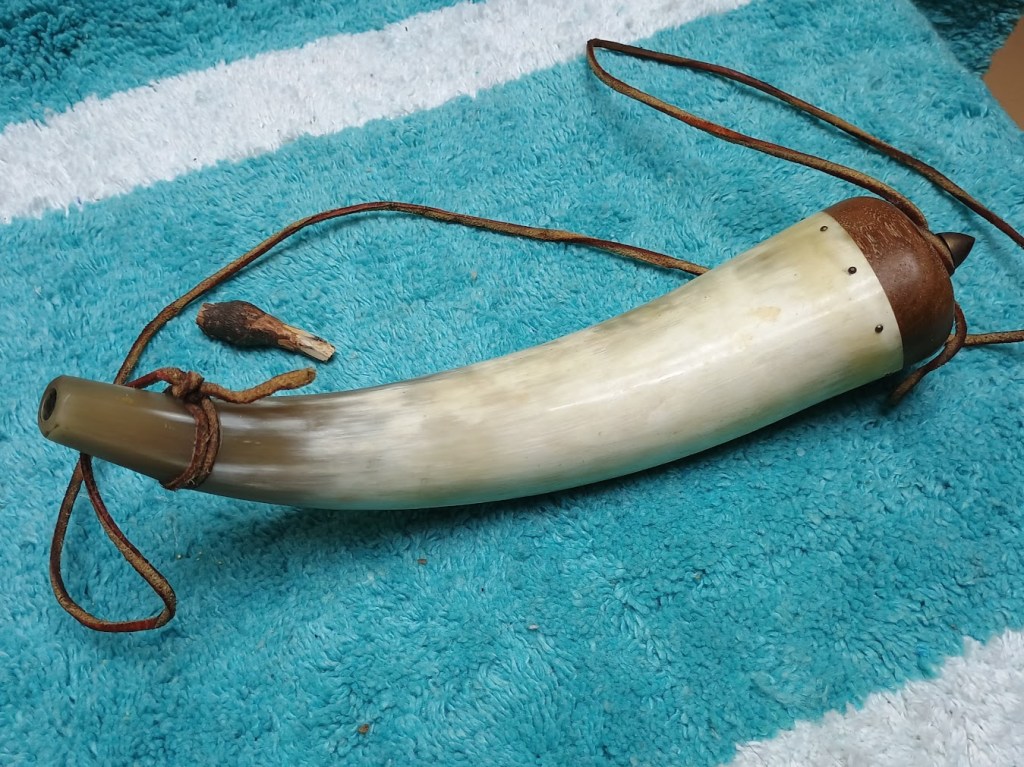
4. Reproductions (Modern Handmade)
- $200–$800: Artisans like Eric Kettenburg or Nelson Lewis sell hand-engraved horns using period techniques.
Pricing Tips for Selling/Buying
- Provenance is king: Letters, old photos, or family histories boost value.
- Check auction archives: Look up past sales on Rock Island Auction Co. or Cowans.
- Condition matters: Cracks reduce value; patina and wear can add charm.
Final Thought:
A powder horn’s value isn’t just in its age—it’s in the whispers of gunpowder and wilderness still trapped inside.
Disclaimer: This information is being provided for educational purposes within the guidelines of Fair Use.


Leave a Reply